
Pick up your phone and scroll through your missed calls. Chances are, there is at least one number you do not recognize. Maybe it called once and never again. Maybe it keeps showing up every few days. You have no idea if it is a business, a person you used to know, or someone you should be concerned about.
This is a problem millions of Pakistanis deal with every single day. And for most of them, there is no easy answer. Calling back a suspicious number puts you at risk. Ignoring it leaves questions unanswered. Neither option feels right.
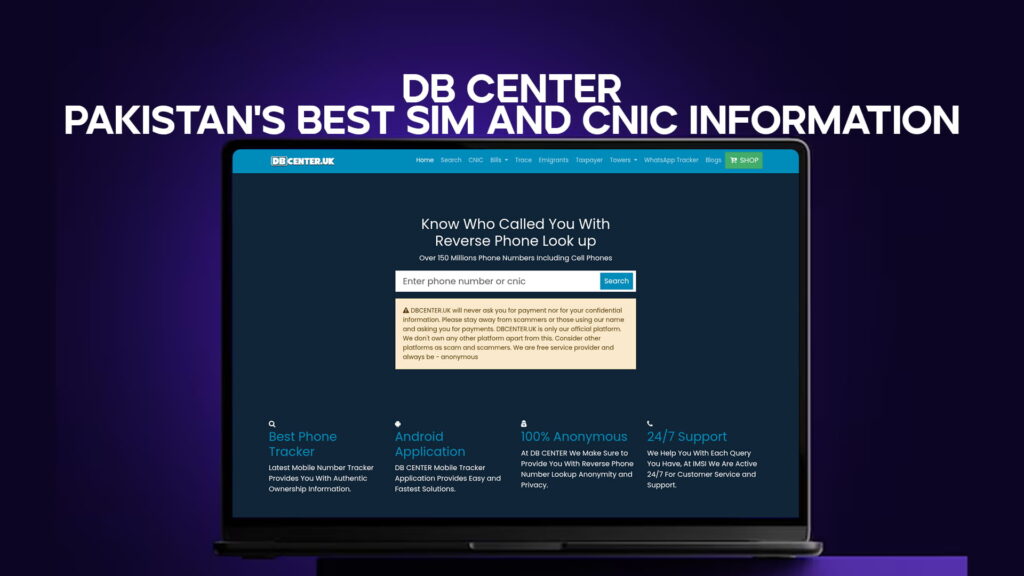
DB Center exists to change that. It is Pakistan’s most capable reverse phone lookup platform, built on a database of over 150 million phone numbers including mobile and cell numbers. For users in Pakistan, it connects those numbers to SIM registration records and CNIC details, giving you clear, reliable information about who owns any number you search. It is fast, simple to use, and available any time you need it.
This article covers everything about how DB Center works, why SIM and CNIC information matters in Pakistan, and how you can use the platform to protect yourself and stay informed.
Why Pakistan Needs a Dedicated SIM and CNIC Lookup Platform
Pakistan is one of the most mobile-connected countries in South Asia. With hundreds of millions of active SIM cards across multiple networks, mobile communication is woven into every part of daily life, from banking and business to family communication and government services.
But this scale also creates problems. A large mobile user base means more opportunities for scammers, fraudsters, and bad actors to operate through phone calls and messages. Unknown numbers are used for phishing attempts, fake offers, harassment, and threats. Victims often have no way to trace who is behind the number.
Pakistan’s SIM registration system was designed to solve part of this problem. The PTA requires every SIM to be registered with a valid CNIC and biometric verification. This creates a paper trail linking every active number to a real person. But that trail is not automatically visible to ordinary users.
DB Center bridges this gap. It takes the registration data that already exists in the system and makes it searchable by anyone who needs it. For a country the size of Pakistan, with the volume of unknown calls its citizens receive daily, DB Center is not a luxury. It is a necessity.
The Foundation: How SIM Registration Works in Pakistan
To understand what DB Center can tell you, it helps to understand how SIM registration in Pakistan actually works.
When someone buys a new SIM from any mobile network in Pakistan, whether that is Jazz, Telenor, Zong, Ufone, or SCO, they must go through a mandatory registration process before the SIM is activated. This process has two components.
The first is identity verification. The customer provides their CNIC. The 13-digit number on the card is entered into the network’s system.
The second is biometric verification. The customer places their finger on a biometric scanner that connects to NADRA’s national database. NADRA confirms that the fingerprint matches the CNIC in real time. If the match is confirmed, the SIM activates. If it is not, the registration fails and the SIM stays inactive.
This process creates a strong, verified link between the mobile number and the identity of the person who registered it. The registered name is not just something the person typed in. It is a name that was matched against a national identity document and biometric record. This is the data that powers DB Center’s search results for Pakistani mobile numbers.
The PTA also enforces a cap on how many SIMs a single CNIC can hold at one time across all networks combined. This prevents any one person from registering dozens of numbers for fraudulent purposes.
What DB Center Offers Pakistan’s Users
DB Center is built specifically to serve the needs of users who want to look up phone numbers and find the information behind them. For Pakistani users, the platform offers several distinct capabilities.
Reverse phone lookup is the core feature. You enter any phone number and get back information about who it belongs to. For Pakistani numbers, this means the registered name and CNIC details tied to the SIM registration.
SIM owner identification tells you whose name a mobile number is registered under. This is particularly useful when you receive a call from an unfamiliar number and want to confirm the identity of the person before engaging.
CNIC-linked information connects the phone number to the national identity data that was used during SIM registration. This gives you a verified identity rather than just a name someone provided.
Network identification tells you which mobile network the number belongs to. This can help you understand the context of a call and decide how to respond.
Regional registration data is sometimes available, giving you a general sense of where the SIM was registered. This can be useful in certain verification scenarios.
All of this is available through a single search. You type in the number, press search, and the results appear within seconds. No subscription, no account creation, and no technical knowledge required.
CNIC: The Identity Backbone of Pakistan’s Telecom System
No discussion of SIM and CNIC information in Pakistan is complete without understanding what the CNIC actually is and why it matters so much.
The Computerised National Identity Card is issued by NADRA to every Pakistani citizen aged 18 and above. It carries a unique 13-digit number that stays with the individual for their entire life. The card contains the holder’s full legal name, date of birth, address, parent names, and biometric data.
Because it is tied to biometrics and verified by a national authority, the CNIC is the most reliable form of identity verification available in Pakistan. It is required for banking, property transactions, government services, employment, and of course SIM registration.
In the context of mobile communication, the CNIC is what makes every Pakistani phone number traceable. When a SIM is registered, the CNIC used for that registration becomes permanently linked to the number in the telecom system’s records. If you know what CNIC a number is registered under, you know the legal identity of the person who owns that SIM.
DB Center uses this connection to power its results. When you search a Pakistani number and get back a registered name and CNIC details, you are getting information from the verified registration record created when that SIM was activated. This is what makes DB Center’s results for Pakistani numbers genuinely reliable rather than guesswork.
Real Situations Where DB Center Makes a Difference
It is one thing to explain what DB Center does in general terms. It is more useful to look at the kinds of real situations where having access to SIM and CNIC information actually changes outcomes.
The repeated unknown caller. A number calls every other day. No message, no voicemail. You do not know if it is a salesperson, a relative from a new number, or something more concerning. A quick search on DB Center identifies the registered owner and you can decide whether to answer or block the number permanently.
The online transaction gone suspicious. You are buying a second-hand item through an online platform. The seller gives you a number to contact them on. Before transferring any money, you search the number on DB Center. The name that comes back does not match the name the seller gave you. You walk away before making a costly mistake.
The threatening message. Someone sends a threatening text from an unknown number. You have no idea who it is. You search the number, find the registered owner’s name and CNIC details, and take that information to the police. Instead of filing a complaint with nothing to go on, you arrive with an actual identity tied to the number.
The job offer that seems too good. Someone contacts you about a high-paying job with a number you do not recognize. Before sharing your personal information or going for a meeting, you search the number. The registration details give you a starting point for confirming whether the company and contact are real.
The child’s new contact. Your teenager has been receiving calls from a number you do not recognize. You search it on DB Center. Knowing who it belongs to helps you decide whether to address it or leave it alone.
These are not unusual scenarios. They happen every day across Pakistan. In each case, DB Center turns an uncertain situation into one where you have information and can make an informed decision.
SIM Fraud in Pakistan: A Problem DB Center Helps Address
SIM fraud is one of the more serious issues in Pakistan’s mobile sector. It takes several forms and affects ordinary citizens in significant ways.
Unauthorized SIM registration is the most common type. Someone uses a stolen CNIC to register a SIM without the real owner knowing. The real person only discovers this when problems arise, such as receiving complaints about calls made from that number, or finding that SIMs are registered under their name that they never applied for.
SIM swapping attacks target people who use mobile numbers for two-factor authentication on banking apps and online accounts. A fraudster convinces a mobile network that they are the account holder and requests that the number be transferred to a new SIM. Once they have the number, they intercept OTPs and drain accounts.
Bulk SIM registration fraud involves networks of corrupt SIM sellers who register large numbers of SIMs under real but unsuspecting CNICs. These SIMs are then sold for use in spam calling operations, scam networks, or criminal activity.
DB Center helps identify the early signs of these problems. If you search a number and find that the registration details do not add up, or if you discover a number registered under your CNIC that you did not activate, the platform gives you the first piece of evidence you need to take action.
Combined with the PTA’s 668 SMS service, which lets you check all SIMs registered under your CNIC, DB Center provides a practical toolkit for staying on top of how your identity is being used in Pakistan’s telecom system.
How to Protect Your SIM Registration Data
Using DB Center to look up numbers is one form of protection. Actively protecting your own SIM registration data is the other side of the equation.
Check your registered SIMs regularly. Send your CNIC number to 668 to get a full list of all active SIMs registered under your identity. Do this every few months and any time something feels off.
Search your own number on DB Center periodically. This confirms that the registration information in the database is accurate and reflects your actual details. If it does not, contact your mobile network to have the records corrected.
Guard your CNIC number carefully. Do not share the 13-digit number with people you do not trust. Avoid writing it on forms or documents that could fall into the wrong hands. Treat it like a password to your identity.
Report a lost or stolen CNIC to NADRA immediately. Getting it blocked in the system prevents it from being used for unauthorized SIM registrations or other fraudulent purposes.
If you find a SIM registered under your CNIC that you did not register, contact your network provider immediately and request a block. Then file a complaint with the PTA and, if necessary, the FIA Cyber Crime Wing.
What Makes DB Center Pakistan’s Best Option
There are a few tools that claim to offer phone number lookup services in Pakistan, but when you compare them against DB Center, the differences are clear.
Database coverage is where DB Center leads. With over 150 million records including mobile and cell phone numbers, the chances of finding information on any given Pakistani number are high. Smaller or less maintained databases miss results far more often.
Pakistan-specific SIM and CNIC data is something most international lookup tools simply cannot provide. They may confirm that a number belongs to a Pakistani network, but they have no access to the CNIC registration records that make Pakistani SIM data so useful for identity verification. DB Center is built around this local data.
Regular updates keep the database current. New SIM registrations, number transfers, and registration changes are reflected in updated records. Outdated information is a common problem with lookup tools, and DB Center works to avoid this.
No barriers to access mean you can run a search any time without signing up or paying for a basic lookup. The platform is accessible to everyone, regardless of their technical ability or familiarity with online tools.
Speed and simplicity make it practical for everyday use. A search takes seconds. The results are presented clearly without unnecessary complexity. You get the information you need and move on.
For Pakistani users looking for a reliable, comprehensive, and easy-to-use SIM and CNIC information platform, DB Center is the strongest option available.
Final Thoughts
Pakistan’s SIM registration system exists to create accountability in the mobile sector. Every number in the country should be traceable to a verified identity. That system works, but only if the data it generates is accessible to the people who need it.
DB Center makes that data accessible. With over 150 million phone numbers in its database and deep coverage of Pakistan’s SIM and CNIC registration records, it gives ordinary users the ability to identify unknown callers, verify contacts, protect themselves from fraud, and stay on top of how their own identity is being used in the telecom system.
It is not a complicated tool. It does not require technical knowledge or a paid subscription for basic use. You enter a number, press search, and get an answer. That simplicity is by design, because the need to know who is calling you should never be harder than a few seconds and a search.
For anyone in Pakistan who wants reliable SIM and CNIC information at their fingertips, DB Center is the platform that delivers it.
DB Center stands out because of its database size, covering over 150 million numbers including Pakistani mobile numbers, its specific coverage of SIM registration and CNIC-linked data, regular database updates, and a search experience that anyone can use without technical knowledge or account registration.
DB Center’s database is built from SIM registration records that are created when mobile networks activate SIMs through the PTA’s mandatory biometric verification process. Each registration links a mobile number to the CNIC and verified name of the person who registered it, and this data feeds into the platform’s search results.
DB Center lets you search numbers that may be linked to your identity. To get a complete list of all SIMs registered under your CNIC across all networks, you can also text your CNIC number to 668. Using both together gives you the most complete picture of your SIM registration footprint.
Search the number on DB Center first to find the registered name and CNIC details. Then report the number to your mobile network provider and file a complaint with the PTA through their official online portal. If the scam involved financial fraud, report it to the FIA Cyber Crime Wing as well.
Yes. DB Center displays information from SIM registration records that were created through an official government-mandated process. Using the platform to identify unknown callers, verify contacts, or protect yourself from fraud is a completely legitimate use. The platform should not be used for harassment, stalking, or any purpose that violates Pakistani law.